OnlyFans is changing its Terms of Service, and creators have good reason to pay attention.
The updated terms are scheduled to take effect on November 1, 2026, with creators reportedly already receiving notifications to accept them when logging in.
At first glance, another Terms of Service update might not seem like a big deal. After all, who hasn't clicked “Accept” without reading every single word?
But this time, it's worth taking a closer look.
A comparison between the August 2024 terms and the new October 2026 version highlights changes involving account suspensions, artificial intelligence, third-party tools, payouts and advertising disclosures.
Some changes introduce new restrictions, while others give OnlyFans more flexibility in how it manages accounts and earnings. And when your income depends on the platform, even small changes in wording can matter.
Here are five things creators should know before accepting the updated terms.
1. Account Suspensions Could Become Easier
This might be one of the most concerning changes for creators, especially those who rely on OnlyFans as their main source of income.
Under the August 2024 terms, OnlyFans could suspend an account or withhold earnings without warning if it believed a creator had seriously or repeatedly violated its rules.
The updated wording removes that threshold.
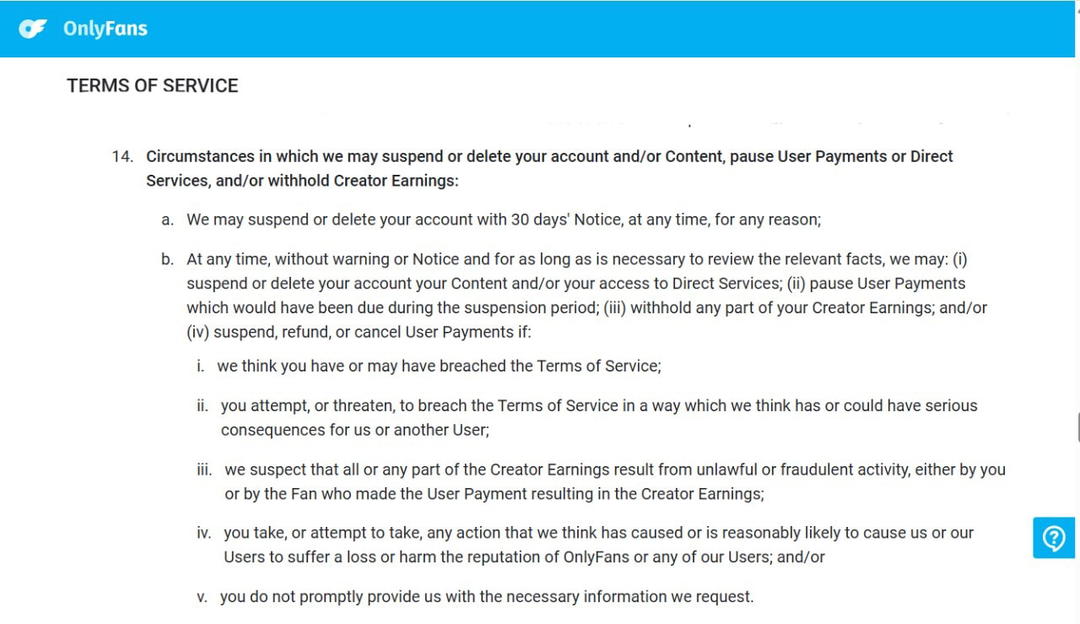
Section 14.b now allows action where OnlyFans believes a user has breached or may have breached the Terms of Service.
And that's quite a difference.
Previously, the wording specifically referred to serious or repeated violations. Under the new language, even a suspected breach may be enough to trigger a review, suspension or temporary withholding of earnings.
But there's more to it than that.
The updated terms also introduce additional grounds for action, including conduct OnlyFans believes could damage the platform's reputation or cause losses to the company or its users.
Creators may also face consequences if they fail to provide requested information promptly.
Does this mean one minor mistake will automatically result in a permanent ban?
Not necessarily.
The terms give OnlyFans broader powers, but that doesn't mean every suspected violation will lead to permanent account closure.
Still, it's something creators shouldn't overlook. The updated wording suggests that enforcement may no longer depend on a violation being serious or repeated.
2. OnlyFans Tightens Its Rules Around AI and Third-Party Tools
Artificial intelligence is becoming increasingly common in content creation.
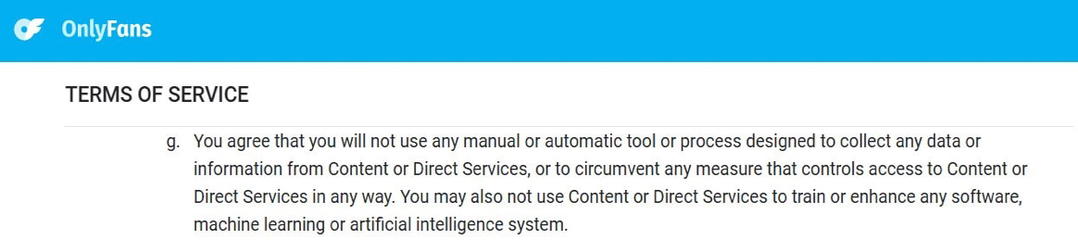
Section 8.g addresses tools designed to collect information from platform content, bypass access restrictions or use content to train or improve software and AI systems.
This raises important questions for creators using customer relationship management (CRM) software, automated messaging systems or external management agencies.
However, there's an important distinction.
The updated terms do not explicitly ban every CRM platform or AI chatbot.
Whether a particular tool violates the rules depends on what it actually does, how it accesses information and whether its operations comply with OnlyFans' policies.
For creators using third-party services, it's worth asking providers how their software complies with the updated terms and requesting that explanation in writing.
AI-generated content faces additional restrictions
The updated Section 19.b also changes the requirements for AI-assisted content.
Under the previous terms, AI-generated content generally needed to comply with platform rules and be clearly labelled.
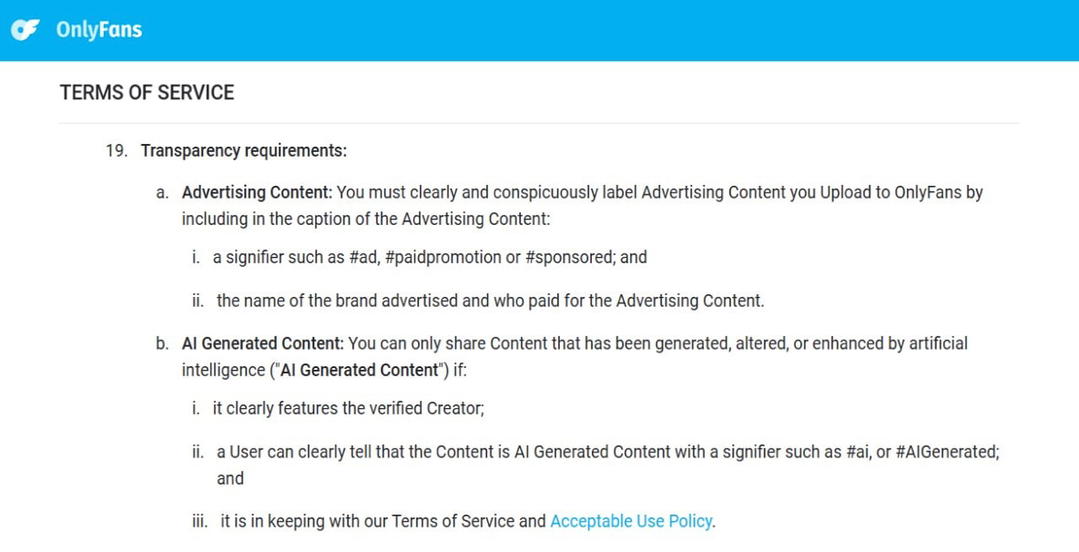
The new wording explicitly covers content generated, altered or enhanced using artificial intelligence.
It also requires qualifying AI content to clearly feature the verified creator and be labelled so users can recognize it as AI-generated.
This could make it more difficult for accounts relying entirely on AI-generated identities to operate under the rules.
But here's where things get a little complicated.
What happens when a creator uses AI to enhance lighting, retouch a photograph or improve video quality?
The wording is broad enough to raise questions about some everyday editing tools, although it does not establish that every minor AI-assisted adjustment is prohibited.
Creators should therefore check the current requirements before assuming that a familiar editing application is exempt.
Interestingly, Section 12.e also allows OnlyFans itself to provide AI-enabled platform services to improve creator interactions. These systems may process content, including direct messages.
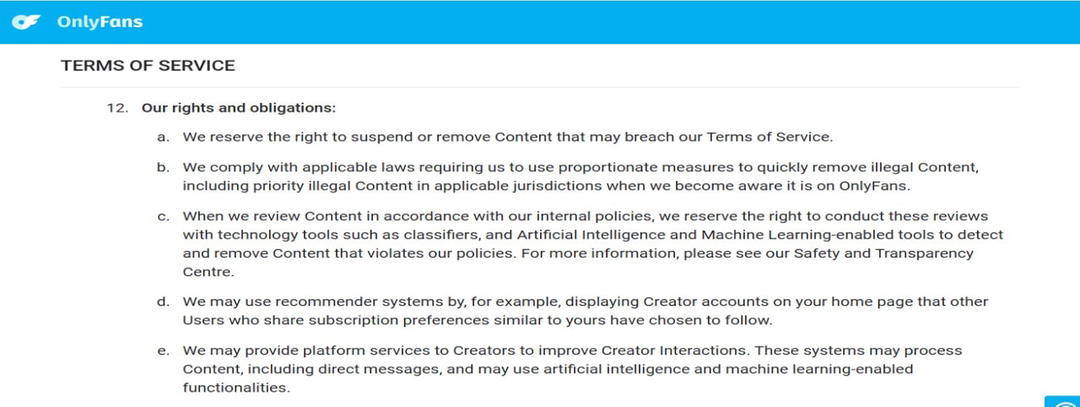
In other words, OnlyFans isn't rejecting AI entirely. It's setting boundaries around how AI can be used on its platform.
3. Currency Conversion Fees Could Affect Creator Payouts
Nobody enjoys unexpected fees, especially when they appear between earning money and actually receiving it.
The updated terms introduce clearer language about currency conversion costs.
Under the August 2024 terms, OnlyFans explained that banks might charge conversion fees when processing payouts.
Section 10.e of the new version now states that payouts requiring currency conversion will include conversion fees covering processing costs and exchange rates.
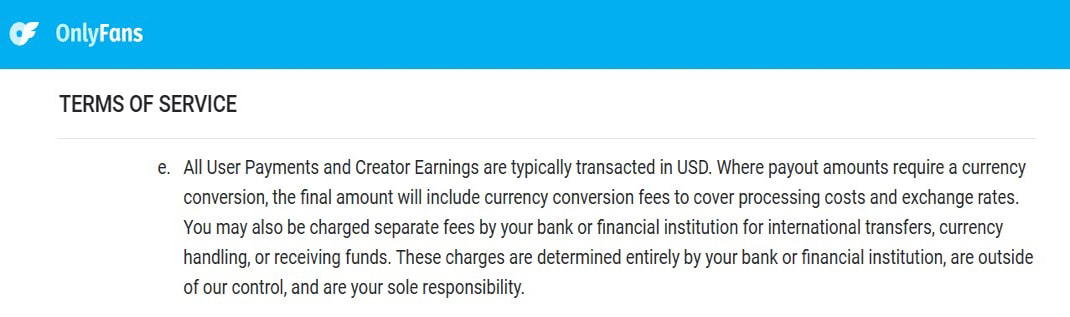
For creators receiving earnings in a currency different from the platform's usual payment currency, this could affect the final amount deposited into their accounts.
And depending on the payout method, their bank or financial institution might charge additional fees.
The updated terms don't specify one universal conversion fee for every creator.
So, how much will it actually cost? That may depend on the creator's location, payout method and currency.
And it's not just creators who should pay attention.
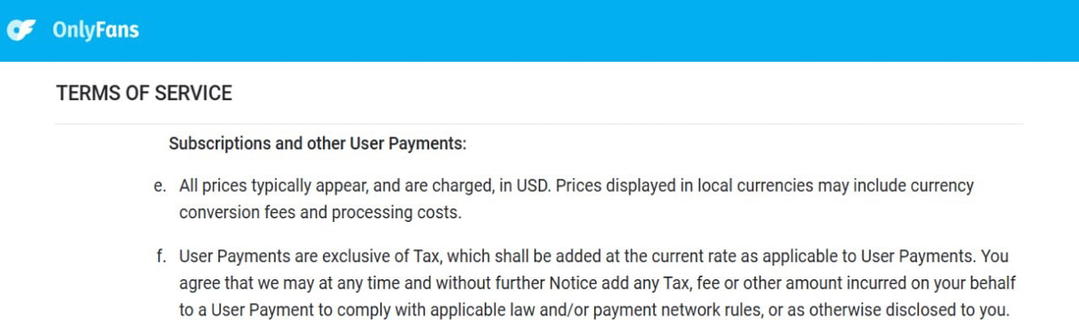
Sections 9.e-f also explain that prices displayed to fans in local currencies may include conversion fees and processing costs. OnlyFans may also add applicable taxes or other disclosed charges to payments.
For creators, the important question is straightforward:
How much of the money earned actually reaches your bank account?
It's worth keeping a closer eye on payout statements, exchange rates and any additional charges rather than assuming the amount shown on the platform is exactly what you'll receive.
4. Affiliate Links Are Now Explicitly Covered by Advertising Rules
Promoting another brand or earning commission through affiliate links might seem like ordinary social media marketing.
But OnlyFans is making its advertising requirements more explicit.
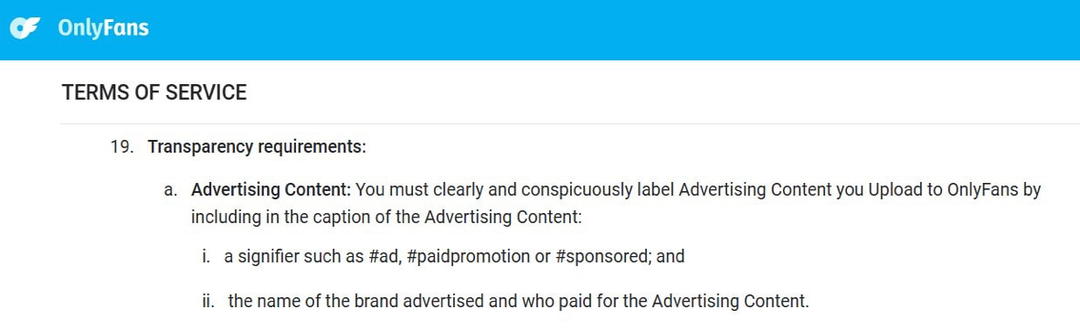
Under Section 18 of the updated terms, advertising content specifically includes paid sponsorships and affiliate arrangements.
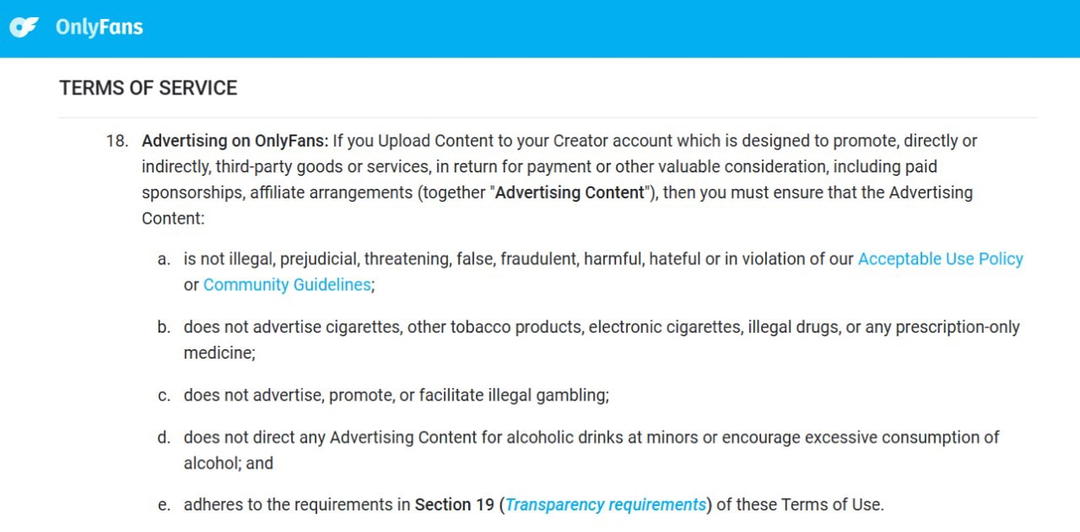
That means creators promoting products or services through affiliate relationships need to pay closer attention to the platform's advertising disclosure requirements.
Section 19a requires advertising content to be clearly identified, including an appropriate advertising label, the advertised brand and information identifying who paid for the promotion.
One important detail worth mentioning is that the disclosure requirement itself isn't entirely new.
The meaningful change is that affiliate arrangements are now explicitly included within the definition of advertising content.
For creators who earn additional income through brand partnerships, referral arrangements or affiliate marketing, this distinction matters.
Think about it this way: a post might look like a casual recommendation, but if you're earning a commission or receiving something of value in return, it may count as advertising under the platform's rules.
And subscribers shouldn't have to guess whether a recommendation is sponsored.
The safest approach is to be upfront about commercial relationships and make those disclosures clear from the beginning.
5. You May Receive Less Advance Notice About Future Changes
Here's a change that could easily get lost among the more attention-grabbing updates.
Under the August 2024 terms, OnlyFans stated that it would notify users of changes so they could decide whether to delete their accounts before the changes took effect.
The updated Section 4 uses less definite wording.
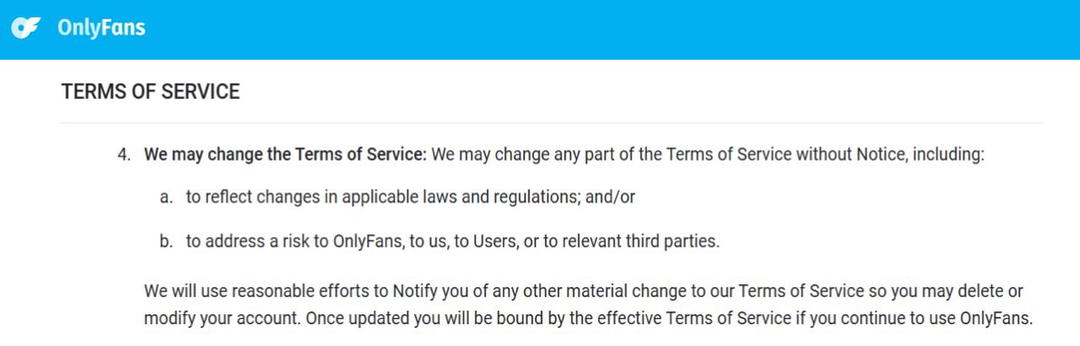
OnlyFans now says it will use “reasonable efforts” to notify users about other material changes to its Terms of Service.
That's not quite the same promise.
The revised wording also explicitly allows OnlyFans to change parts of the terms without notice, including when responding to changes in laws and regulations or addressing risks to the platform, its users or relevant third parties.
Does this mean creators will suddenly stop receiving policy announcements?
Not necessarily.
But it does mean creators shouldn't assume that every future change will come with enough warning to adjust how they run their accounts.
And there's another reason this matters.
For many creators, OnlyFans isn't just another social media account. It's a source of income, a way to connect with subscribers and, in many cases, an important part of their business.
A policy change can therefore affect much more than what someone is allowed to post.
It can influence how creators communicate with subscribers, promote their content, manage their accounts and receive payments.
What Hasn't Changed?
Not everything in the updated Terms of Service is new.
OnlyFans continues to retain its familiar 20% platform fee, leaving creators with 80% of qualifying payments.
The terms also retain provisions allowing account closure for any reason with 30 days' notice.
Some dispute-resolution deadlines remain unchanged, although creators should carefully distinguish between different types of claims and disputes.
These details are worth remembering. Just because a document has been updated doesn't mean every rule has been newly introduced or tightened.
What Creators Should Do Before 1 November
You don't need to panic every time OnlyFans updates its Terms of Service.
But if the platform plays an important role in your income, knowing the rules is simply part of running your business.
Before accepting the new terms:
- Read the updated terms, particularly the sections affecting suspensions, earnings and content.
- Review your third-party tools, including CRM software, messaging services and management agencies.
- Check your AI-assisted content to ensure it meets the platform's updated requirements.
- Review payout arrangements, especially if your earnings require currency conversion.
- Label affiliate and sponsored content clearly, and keep copies of important account communications.
And perhaps most importantly, don't build your entire business around the assumption that a platform's rules will always stay the same.